

Event Archive
Lectures

Professor Sarah Billington
Chair and UPS Foundation Professor of Civil & Environmental Engineering and a Senior Fellow in the Woods Institute for the Environment at Stanford University. From 1998 to 2002 she was an Assistant Professor at Cornell University. She received her B.S.E. with high honors in Civil Engineering & Operations Research and a certificate in Architecture Studies from Princeton University and her M.S. and Ph.D. in Structural Engineering from the University of Texas at Austin. Her past research focused on sustainable, durable construction materials including bio-based composites and ductile cement-based composites. Her current research focuses on the impact of building design and materials on human wellbeing and on the public acceptance of affordable housing.

Full Professor of Cognitive Science in the D-GESS at ETH Zürich since 2013, with an emphasis on Applied Cognitive Science. Since 2016 Christoph is a Principal Investigator at the Singapore ETH Center (SEC) Future Cities Laboratory, heading a research group on ‘Cognition, Perception, and Behaviour in Urban Environments’. Christoph is the Program Director of Future Resilient Systems FRS at the SEC since 2019, leading the current FRS 2 phase (2020-2025).

Esther Sternberg M.D. / SPEAKER
Internationally recognized design and health, mind-body science pioneer, Esther Sternberg M.D., Her Wellbuilt for Wellbeing – GSA research is informing healthy design standards.

Prof. Nathaniel Fast
The use of artificial intelligence to track employee behavior and direct human resource decisions is spreading rapidly, but little is known about how employees will respond to these new practices.

Prof. Jin Wen
In this seminar, an overview on the current status of data-driven smart building technologies, especially in the areas of Automated Fault Detection and Diagnosis (AFDD) and building-to-grid integration, will be presented.

Prof. Larry D. Rosen
Dr. Rosen has been studying the impact of technology since the early 1980s and has seen our world become more complex and distracting due to three game changers: (1) the World Wide Web, (2) Smartphones, and (3) Social Media.

Dr. Ruggiero Lovreglio
Understanding how people behave during disasters is fundamental to enhance the safety of building from the design stage to the maintenance stage.

Dr. L. Casey Chosewood
Despite improvements in occupational safety and health over the last several decades, today’s workers still report for duty to jobs with unacceptably high levels of work-related injury, illness, disability and death.

Prof. Rishee Jain
The world is rapidly urbanizing. Scientists, engineers and policy-makers are now facing the daunting task of providing billions of urban citizens with such core necessities as clean energy, air and water.

Tianzhen Hong
U.S. Cities consume 70% of primary energy, produces 80% of GDP, and are facing challenges of aging infrastructure, impact of climate change and extreme weather events.

Prof. Mikhail Chester
At the dawn of the twenty-first century, there are signs that several critical social, technological, and environmental variables are changing in ways that will have major effects on how we design and manage infrastructure.
Workshops
Filter by Year

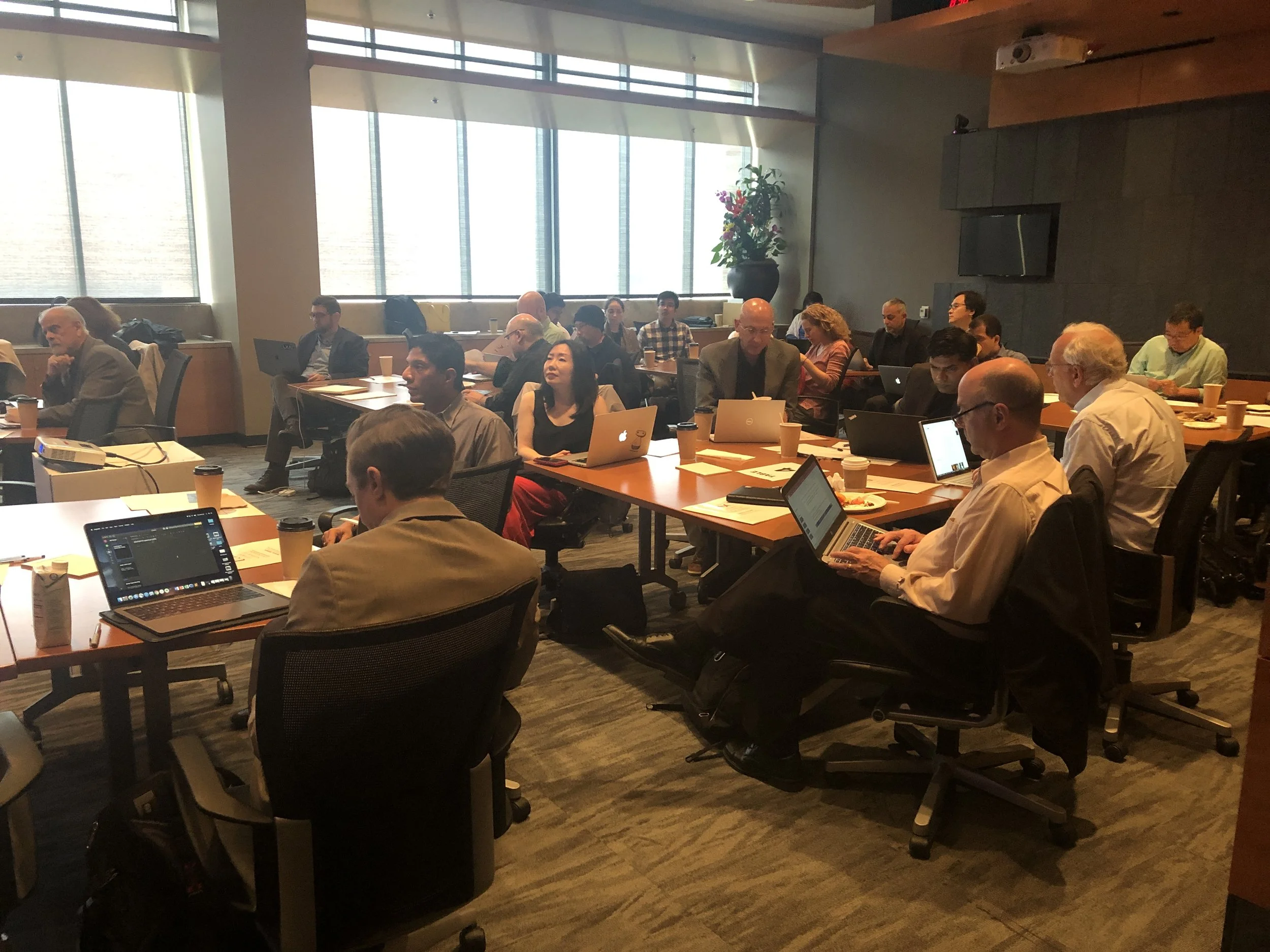
NSF Workshop on HBI
In partnership with NSF and UC Merced, CENTIENTS hosted a two-day workshop focused on human-building interaction (HBI). With over 20 presenters whose expertise ranged from electrical engineering to psychology to architecture, the workshop provided a well-rounded discussion on the many elements that impact HBI. To see each presentation click the button below to watch again.